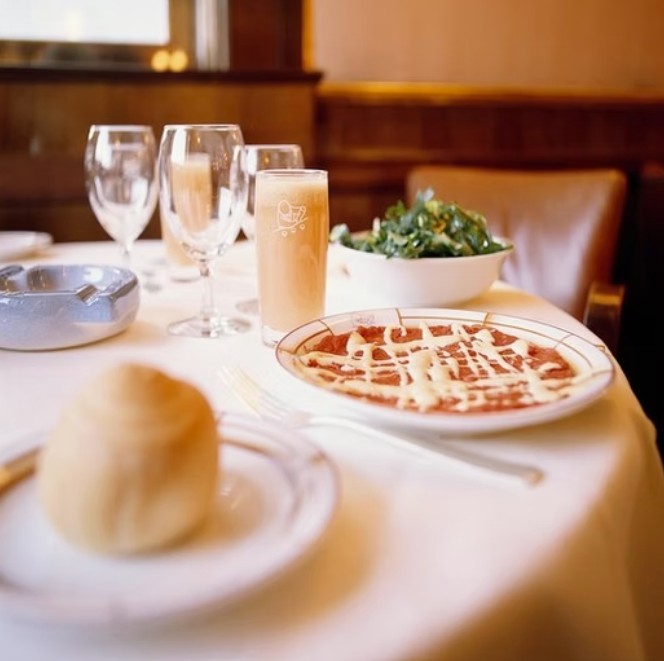
On the edge of St. Mark’s Square, overlooking the glittering lagoon, stands Harry’s Bar — a Venetian legend that has defined the art of hospitality since 1931. Founded by Giuseppe Cipriani, it was born from an act of kindness: a young bartender lending money to a stranded traveler, who later helped him open this now-iconic bar.
From the beginning, Harry’s Bar embodied democracy in elegance. Here, aristocrats and artists sat beside gondoliers, united by the simple pleasures of good food and conversation. Its minimalist interior — white tablecloths, polished wood, unassuming walls — was a deliberate rejection of excess, a declaration that luxury lies in comfort, not opulence.
Cipriani’s genius was simplicity elevated to perfection. The Bellini, invented here with white peach purée and prosecco, and the Carpaccio di Manzo, raw beef dressed with lemon and olive oil, became global icons. Yet nothing at Harry’s feels performative; everything feels personal.
Service, too, follows a code of grace without hierarchy. Waiters greet guests by name, and regulars find their preferred tables waiting as if time itself has paused for them.
For writers like Hemingway and actors like Bogart, Harry’s Bar became a sanctuary — a place where the world outside could wait.
To dine here is to taste Venice’s soul: light, fleeting, eternal. Harry’s remains proof that true refinement whispers; it never shouts.